
Beyond the Oil Change: 4 Critical Maintenance Parts You Are Probably Ignoring
Your car is a complex machine, a symphony of thousands of components working in harmony. Most responsible owners are diligent about the basics: regular oil changes, checking brake pads, and ensuring the tires have tread.
But if you own a premium vehicle—like a BMW, Mercedes, or Audi—or even a reliable daily driver from Toyota or Honda, there are critical components that often fail silently, leading to catastrophic (and expensive) repairs down the road.
At Parts Mart, we believe prevention is always cheaper than a cure. Here are four critical maintenance parts that deserve your immediate attention.
1. The Silent Strangler: The Engine Air Filter
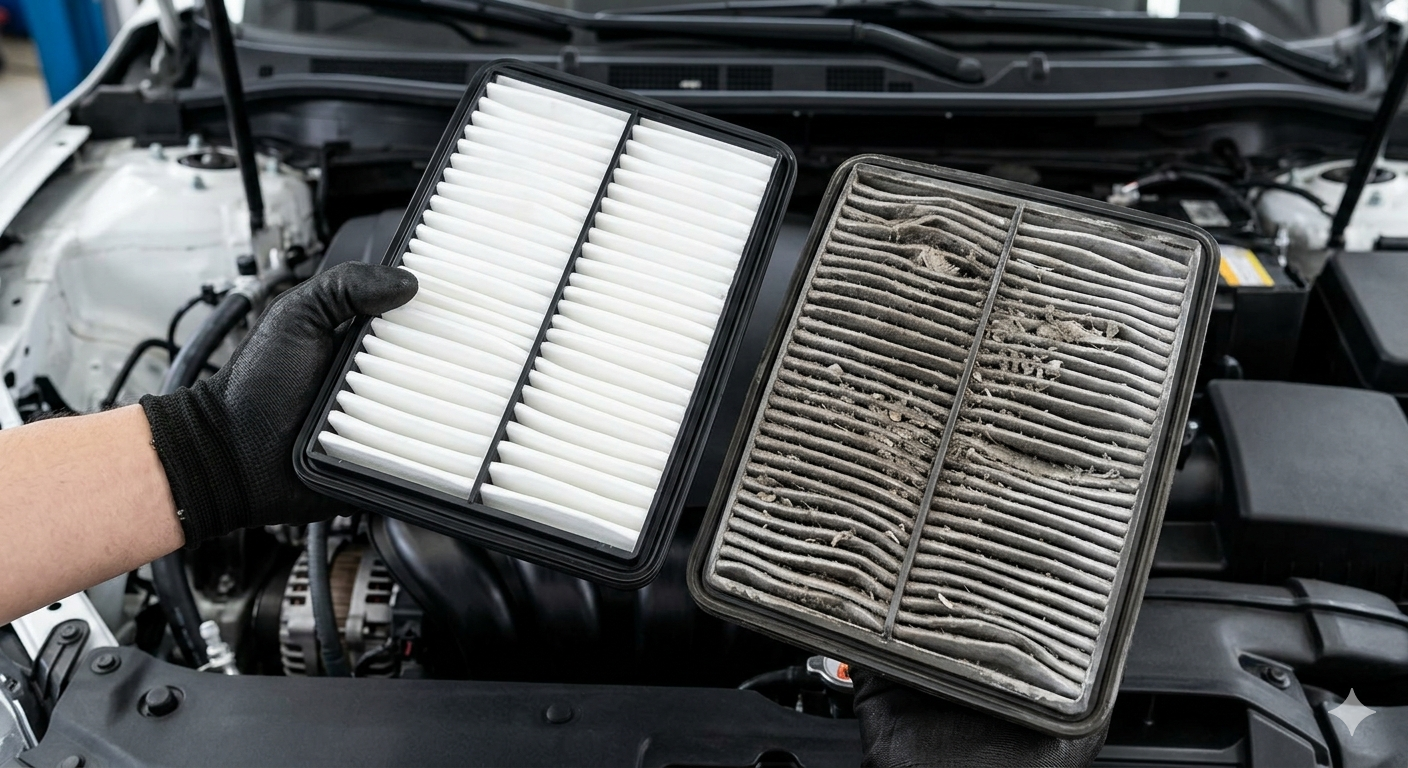
While everyone remembers the oil filter, the engine air filter is often neglected. Your engine needs to breathe. It mixes massive amounts of air with fuel to create combustion.
Why it matters: A clogged, dirty air filter starves your engine of oxygen. This forces the engine to work harder, dramatically reducing fuel efficiency and creating a "sluggish" feeling when you accelerate. For premium turbo-charged engines, clean air flow is absolutely vital for performance.
The Parts Mart Recommendation: Don't just wait for your mechanic to check it. Inspect it yourself every 10,000 miles. A fresh, high-quality OEM-spec air filter is one of the least expensive ways to restore your car's "pep."
2. The Invisible Squeak: Poly-V or Serpentine Belts
You drive your car every day, so you might not notice a subtle, rhythmic squeak that is slowly developing under the hood. This is often the sound of a serpentine belt losing its grip.
Why it matters: This single belt drives almost every critical accessory your engine has: the alternator (which charges your battery), the power steering pump, and the water pump (which keeps the engine from melting down). If this belt snaps while you are driving, your car immediately loses power steering, charging, and cooling. In a premium car, this is not just an inconvenience; it can cause instant, catastrophic engine overheating.
The Parts Mart Recommendation: Visually inspect your belts for cracking, fraying, or glaze. If you see cracks (even small ones), replace the belt and the tensioner pulley. It’s cheap insurance for your entire powertrain.
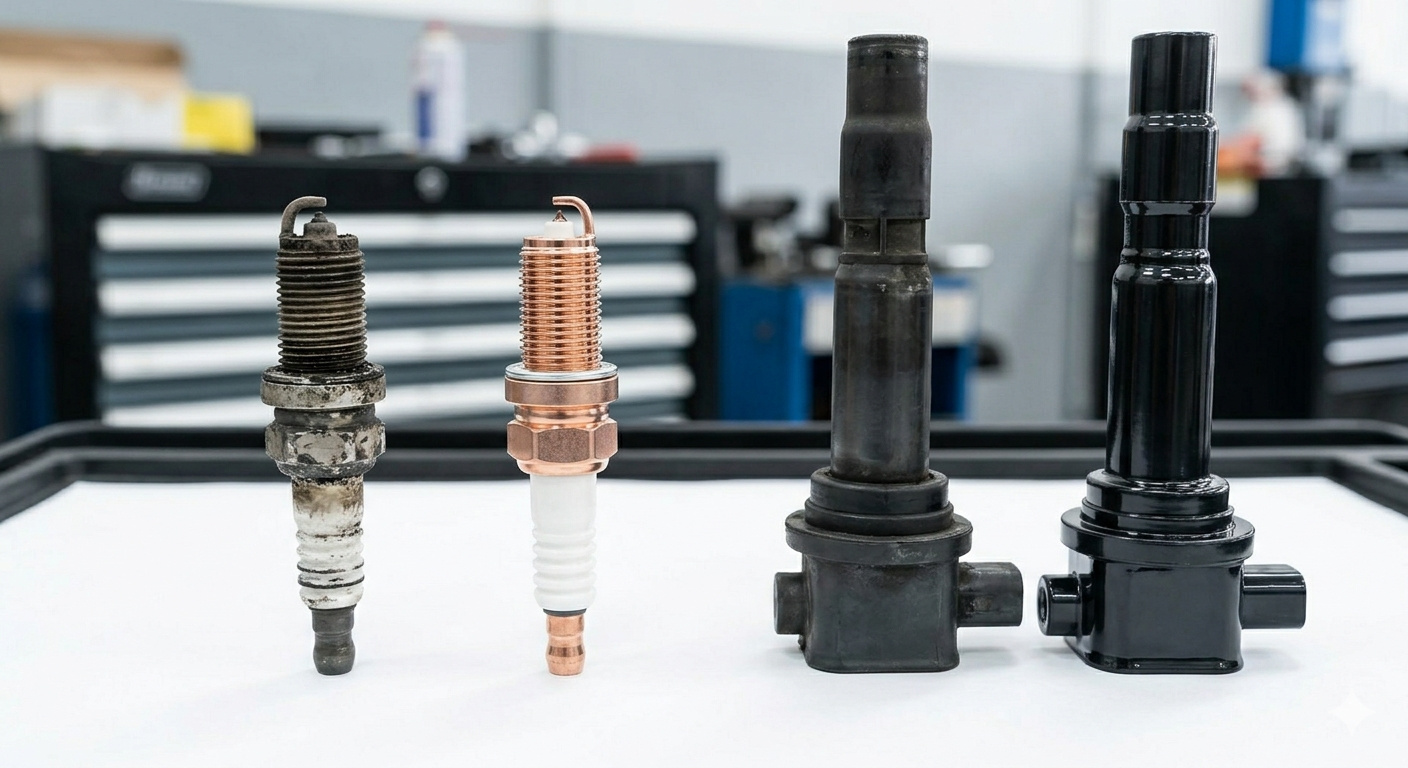
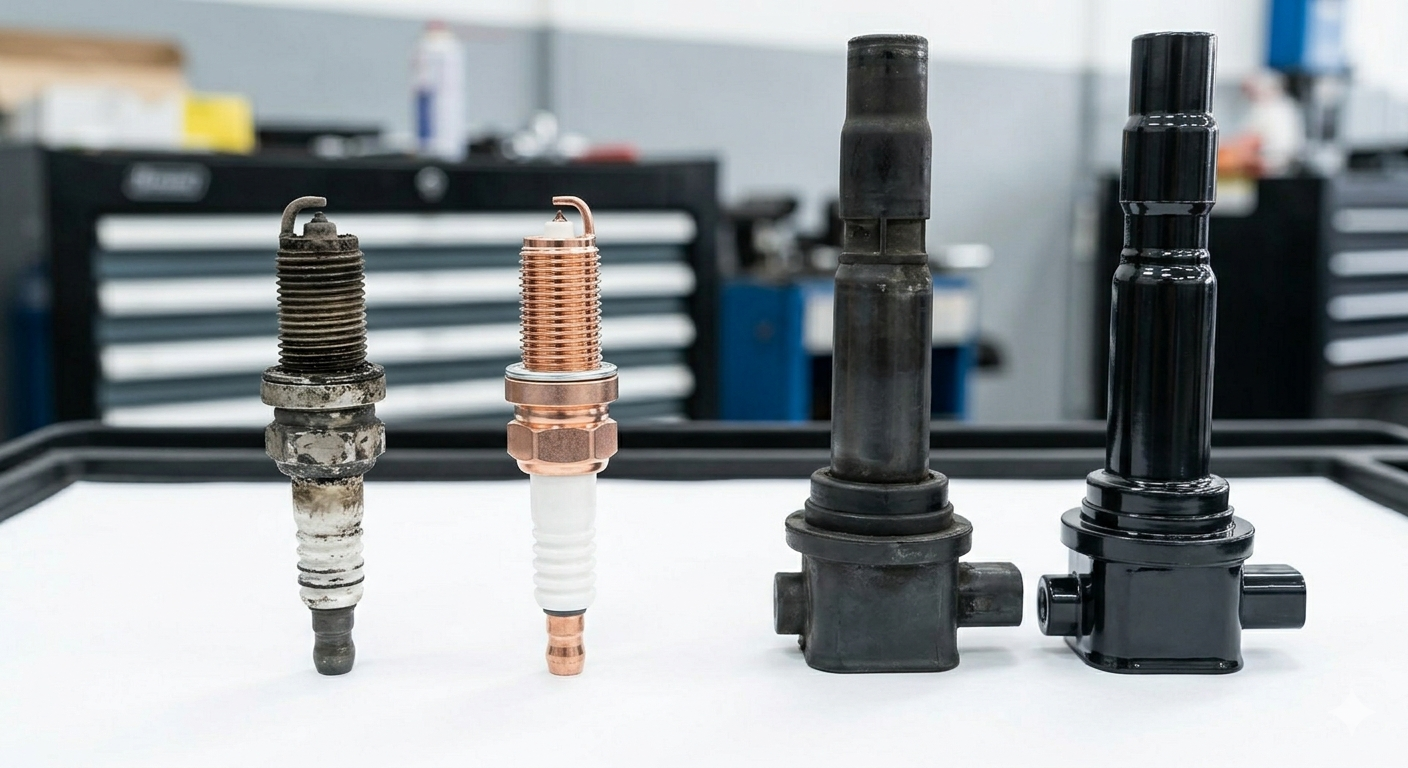
3. The Performance Killer: Worn Spark Plugs and Coil Packs
Your car is misfiring slightly, or the idle feels a bit rough? You might assume it's just "old car character." It isn't. Modern ignition components are incredibly precise.
Why it matters: In modern, high-compression engines (especially the turbocharged powerplants in modern BMWs or Audis), spark plugs and their associated ignition coils operate under intense heat and pressure. Over time, the electrode on the plug erodes, creating a weak spark. This causes incomplete combustion, resulting in power loss, poor fuel economy, and eventual catalyst damage. Many owners replace the plugs but ignore the coil packs, which fail nearly as often.
The Parts Mart Recommendation: If you're experiencing a rough idle or a 'Check Engine' light for a misfire, replace all plugs and coils at the same time. Investing in quality, performance-grade ignition components (like Bosch or NGK) restores the crisp acceleration your premium car was designed to deliver.
4. The Safety Compromise: Brake Fluid (and Lines)
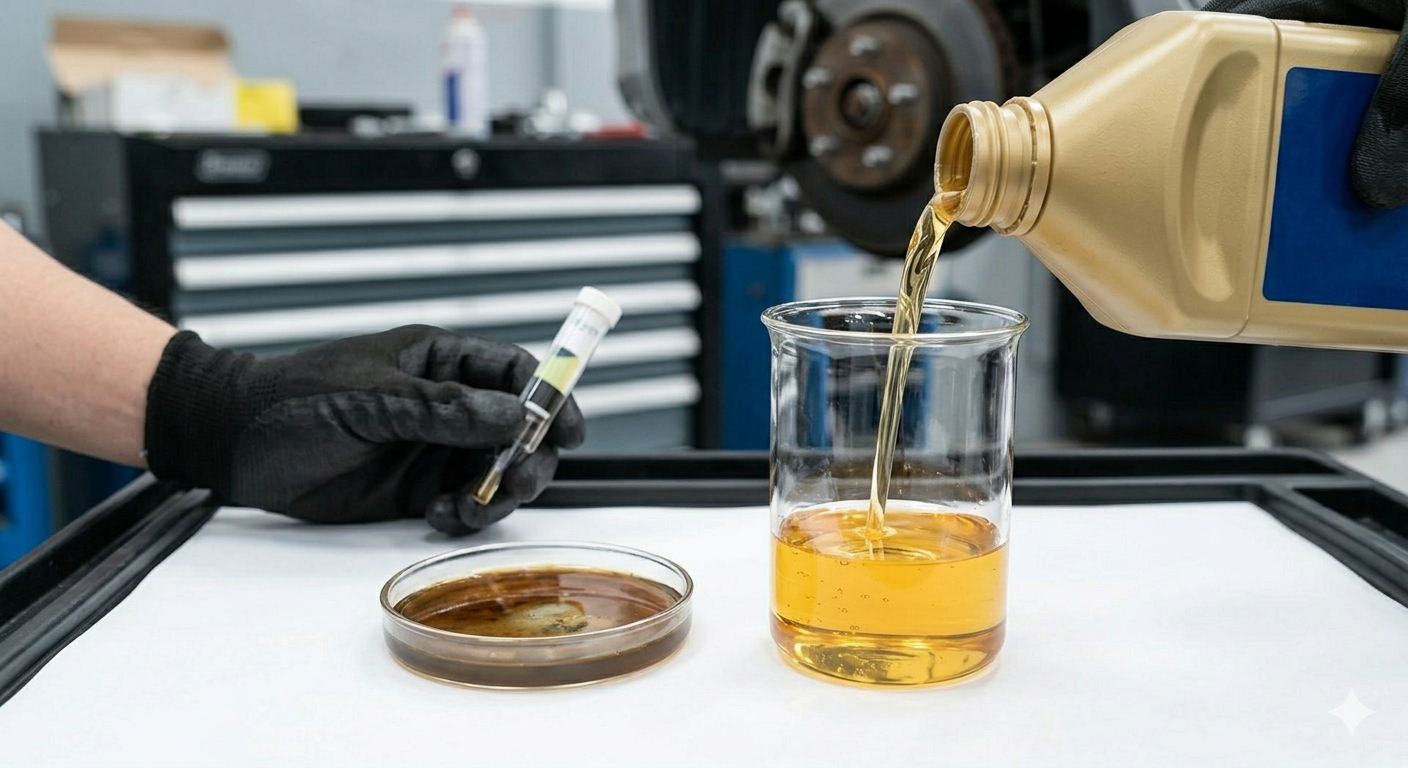
Braking isn't just about pads and rotors. The fluid is the messenger that translates your foot’s pressure into stopping power. Brake fluid is hygroscopic, meaning it actively absorbs moisture from the air over time.
Why it matters: Moisture lowers the boiling point of brake fluid. Under heavy braking (like descending a hill or spirited driving), the fluid can boil, creating air pockets. Since air compresses and fluid does not, your brake pedal will feel spongy, and stopping distances will increase dramatically. Furthermore, moisture corrodes the internals of ABS modules and calipers.
The Parts Mart Recommendation: Your brake fluid should be a clear, light amber color. If it looks dark, like apple juice or worse, it needs a flush. This should be done every two years, regardless of mileage.
Summary: Invest in the Right Parts
Whether you are maintaining a luxury sedan or a bulletproof economy car, the quality of the parts you use matter. Your vehicle was engineered with specific tolerances, and using subpar maintenance components will always cost you more in performance and longevity.
At Parts Mart, we stock high-quality OEM and premium aftermarket spares for all cars. Don't wait for a breakdown.
Explore Our Maintenance Section: Shop Filters, Belts, and Spark Plugs Now