The Lifeblood of Your Engine: Why "On-Time" Is the Only Time for an Oil Change
We’ve all seen it: that little sticker in the corner of the windshield, or the digital reminder on the dashboard. It gently nags us, “Oil Change Due: 5,000 Miles.”
For many drivers, it’s easy to treat that reminder as a suggestion—a task to be pushed off until next weekend, or maybe the weekend after. Life gets busy, and if the car is running fine, what’s the rush?
The rush is that your engine oil isn’t just a fluid; it’s the vital lifeblood of your vehicle. Neglecting it is one of the costliest mistakes a car owner can make. When it comes to oil changes, "on-time" isn’t just a recommendation—it is the only time that matters. Here is why.
The Vital Role of Oil
To understand why timing is everything, you must understand what engine oil actually does. It doesn't just lubricate; it performs four critical functions:
- Reduces Friction: Hundreds of heavy metal parts spin and actuate thousands of times per minute inside your engine. Without oil, the friction would generate catastrophic heat within seconds, welding metal to metal.
- Cools Internal Components: While your radiator handles main cooling, oil circulates through areas coolant can’t reach, drawing heat away from combustion chambers and bearings.
- Cleans the System: Modern oil contains detergents that suspend microscopic soot, carbon, and metal particles, preventing them from forming sludge deposits.
- Prevents Corrosion: Oil forms a protective barrier, preventing moisture and acids (byproducts of combustion) from eating away at engine internals.
1. The Science of Degradation: Why Oil "Goes Bad"
Oil doesn't last forever. The intense heat and pressure inside an internal combustion engine break down the oil’s molecular structure over time. This process is called viscosity breakdown.
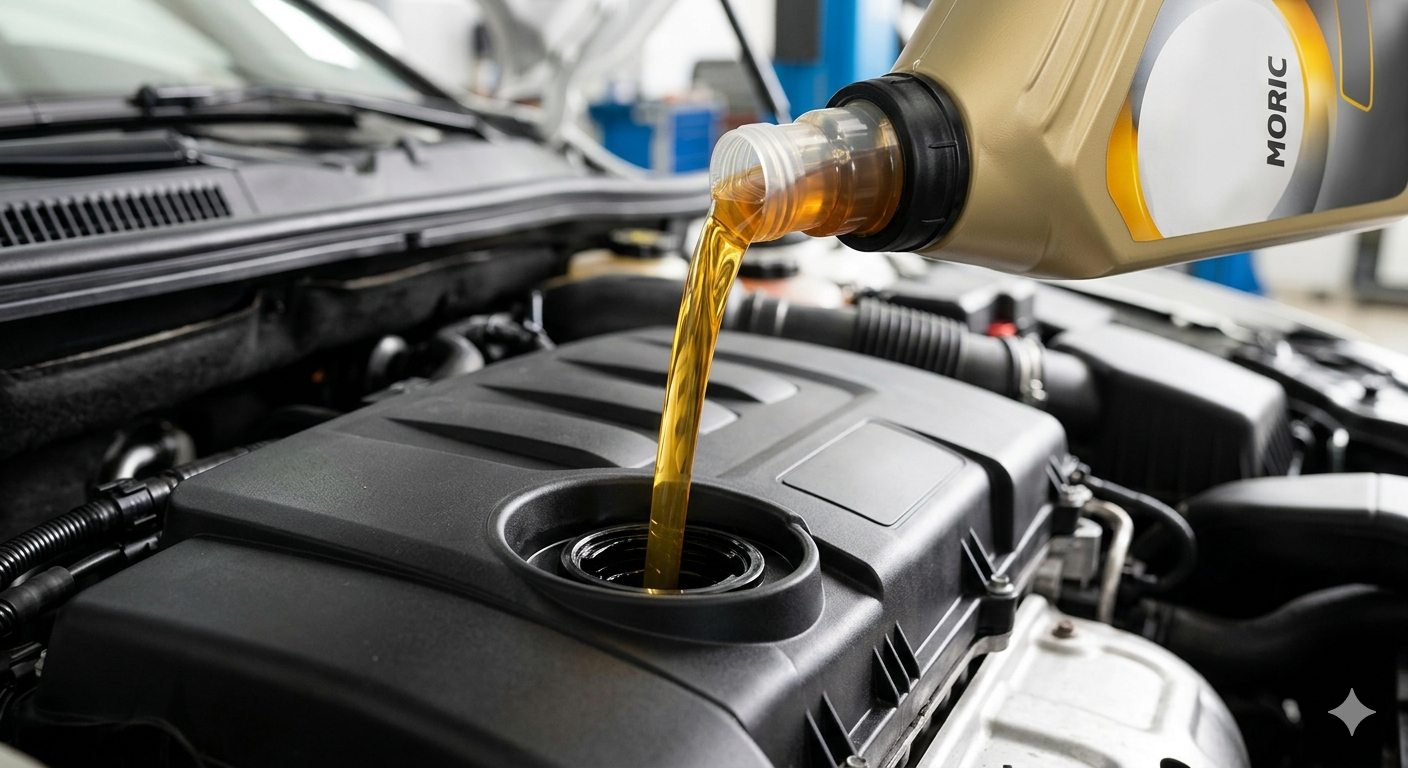
When oil is new, it is translucent, golden, and flows smoothly. It is engineered with specific additives to fight friction and keep the engine clean. The image below shows this ideal state: fresh oil being poured into a clean engine environment.
However, as you drive, the oil collects contaminants (dirt, tiny metal shavings, and carbon). The additives get used up. The viscous fluid turns into a thick, black, aggressive sludge. When you delay an oil change, you are forcing your engine to fight through this abrasive mud.
2. The Danger Zone: A Visual Comparison
The difference between clean and neglected oil is dramatic. If you wait too long, your engine goes from being protected to being actively damaged.
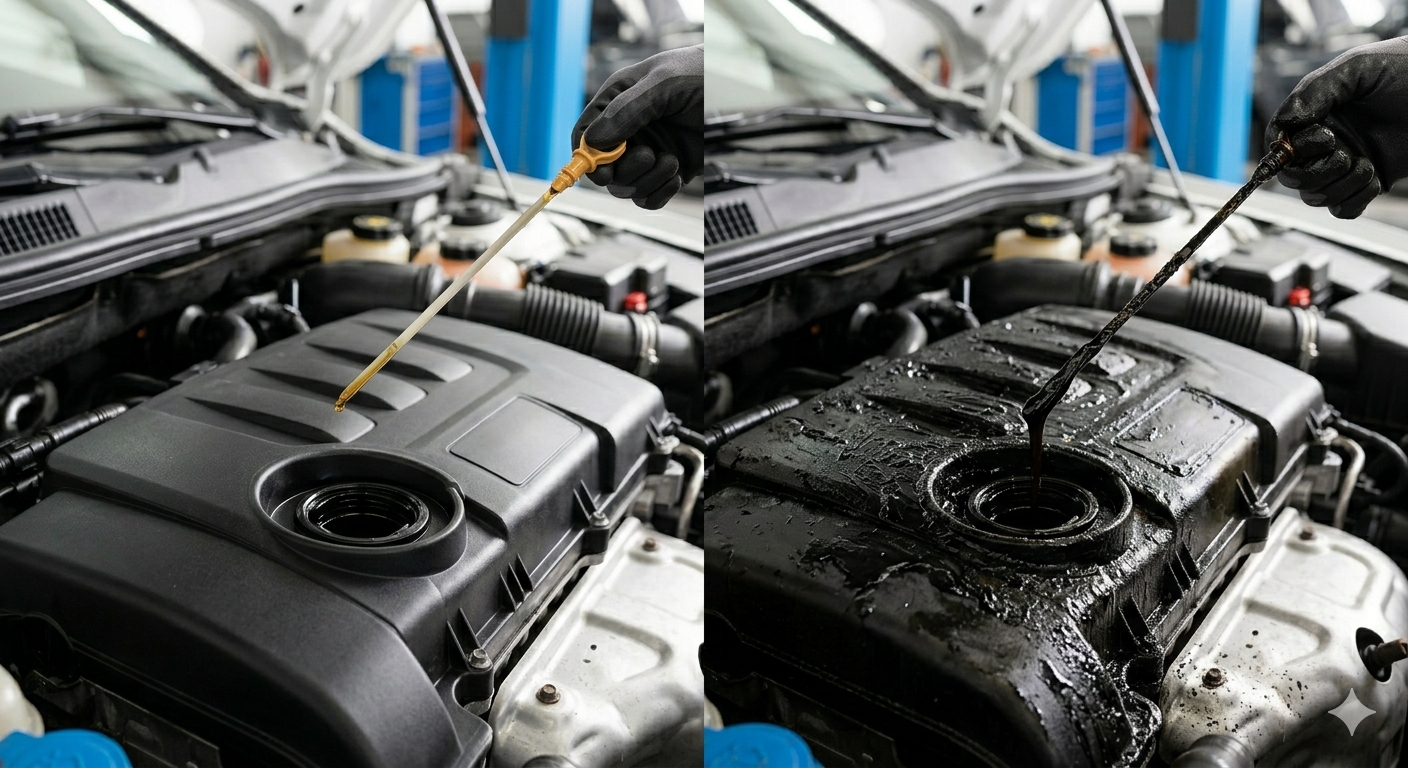
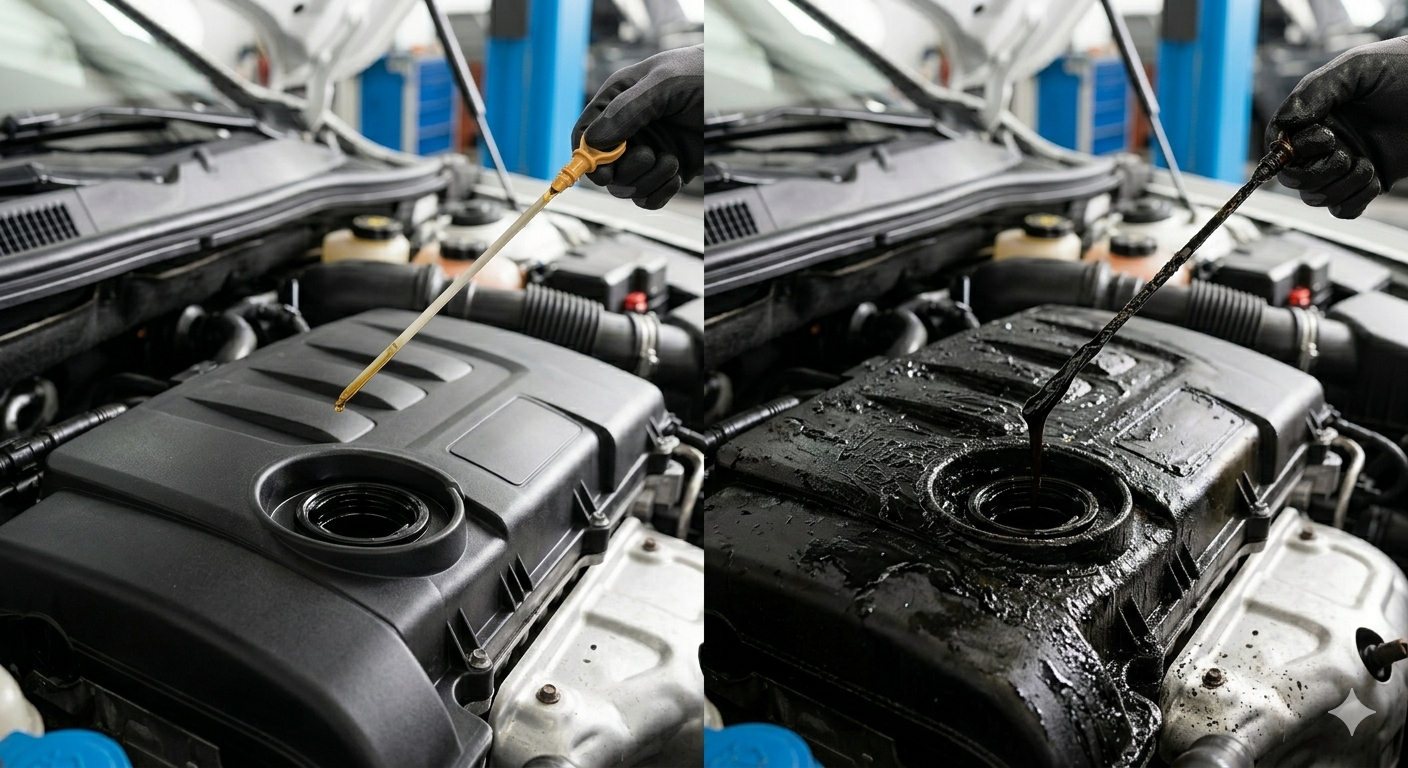
The image below offers a direct comparison. On the left, you see fresh oil. Note how clean the dipstick and the underlying engine components are. This is what on-time looks like.
On the right is the neglected engine. This engine missed its "on-time" window by thousands of miles. The oil is pitch black and thick. The surrounding metal surfaces are coated in heavy, tar-like sludge deposits. This sludge restricts flow, starves critical bearings, and causes components to overheat and fail.
3. The "On-Time" Habit: Your Path to Longevity
Staying "on-time" with your oil changes is the most cost-effective maintenance you can perform. It ensures that your engine always operates with the friction-reducing and cleaning properties it requires.
What defines "on-time"? It depends on your vehicle and driving habits:
-
Follow the Manual: The manufacturer's recommendation (e.g., every 5,000, 7,500, or 10,000 miles) is your definitive guide.
-
Listen to the Monitor: Most modern cars track driving conditions and calculate remaining oil life. If the light comes on, the time is now.
-
Consider "Severe" Conditions: If you frequent stop-and-go traffic, tow trailers, or drive in extreme heat or cold, your oil breaks down faster. You are a "severe" driver and must change your oil more frequently.
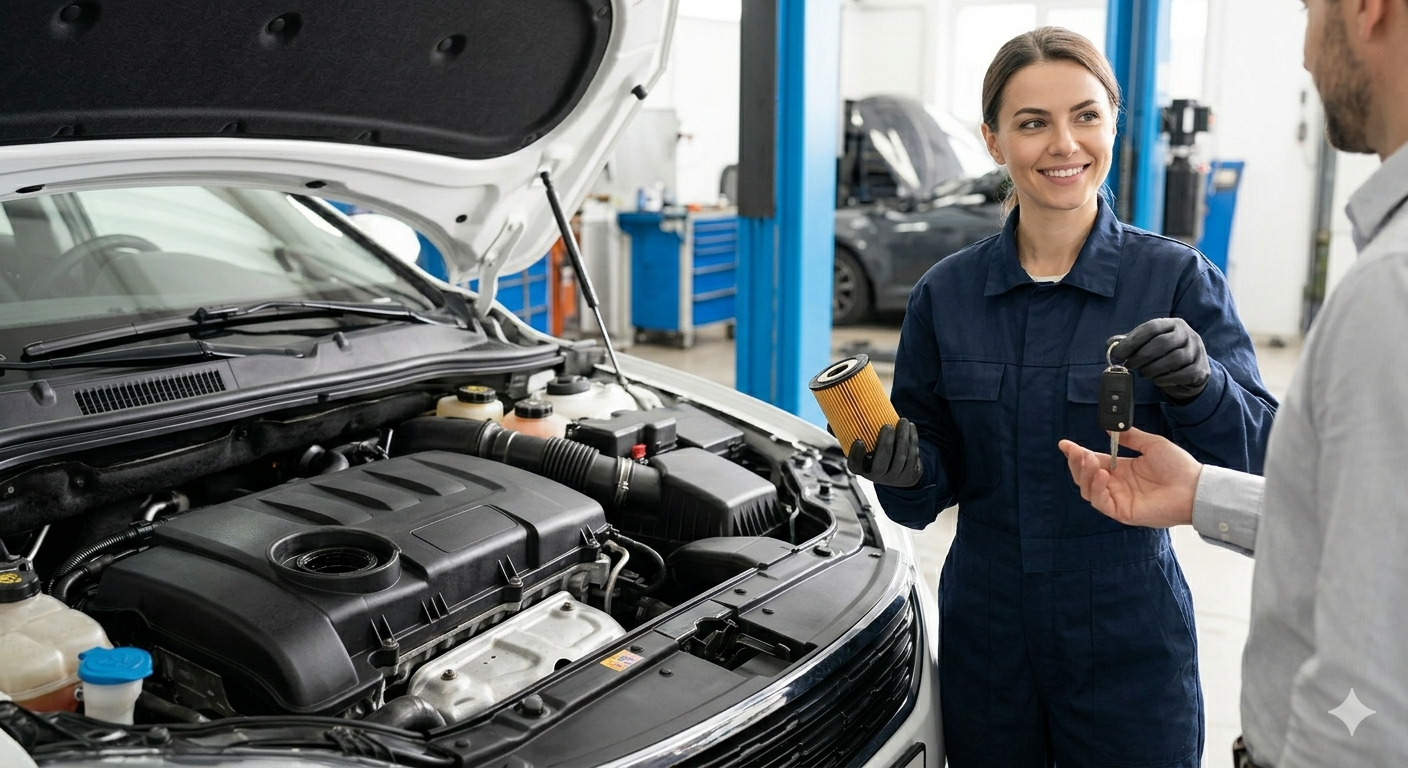
As shown in our final image, completing this service on time is a moment of victory. A professional technician completes the work, resets the system, and hands back the keys. This simple, timely appointment prevents the sludge shown in the previous image and guarantees your engine’s health.
The cost of an oil change is minimal. The cost of replacing an engine seized by sludge is astronomical. Don't wait. When that reminder appears, remember: "On-Time" is the only time.